
Can You Put Deck Tiles on Grass or Dirt?
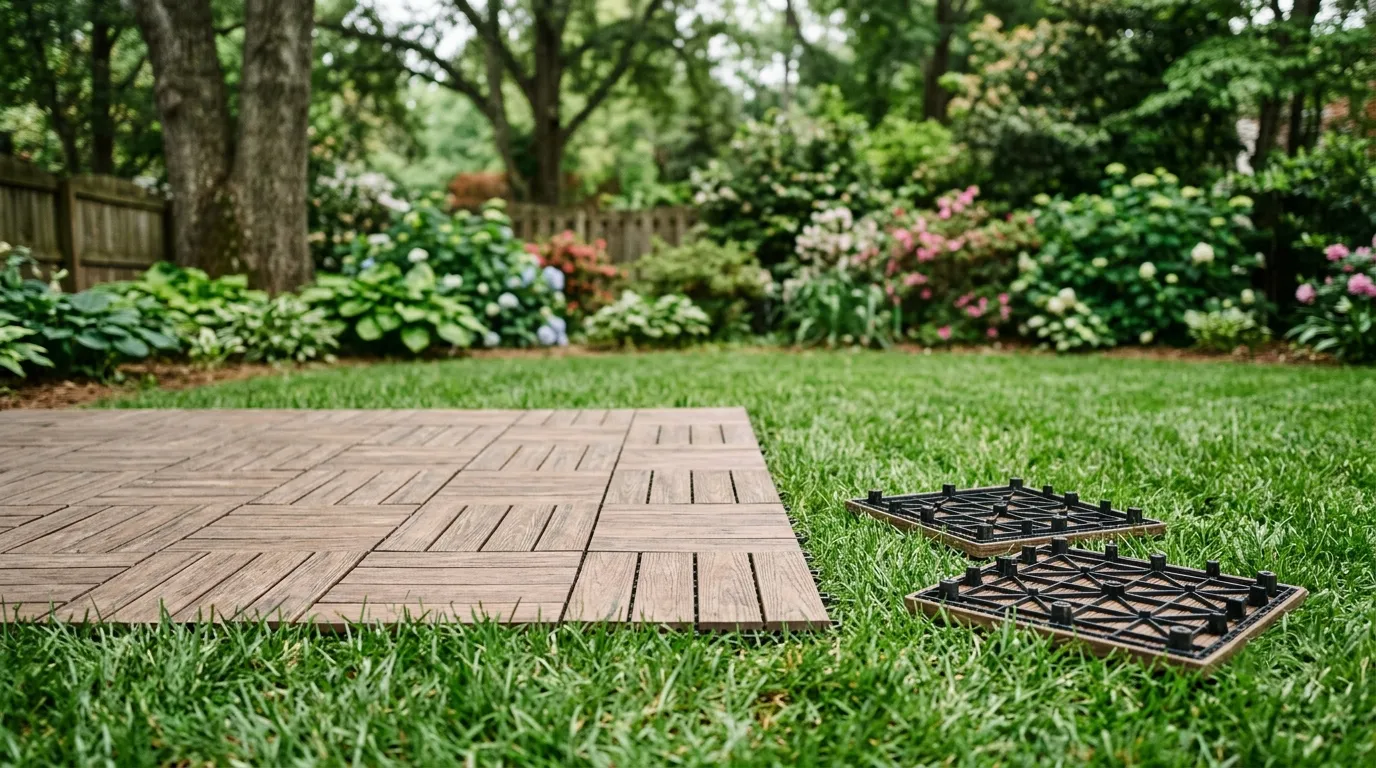
Deck tiles are sold as a lay-anywhere floor, but grass, soil and tired old decking each need a bit of thought first. Here is what works, what does not, and how to prep the ground so the tiles do not rock or rot.
By the Calculate My Reno Team / Published
Skip to the tool
Open the Deck Tile Calculator
The selling point of interlocking deck tiles is that they go down over almost anything without fixings. That is true - but “over anything” still means “over something firm and free-draining.” Grass, dirt and old decking each work, with different prep. Here is the honest version of each.
On grass
You can drop deck tiles straight onto a lawn, and for a one-weekend party floor that is fine. As a permanent surface it is a bad idea:
- Grass is soft and uneven, so the tiles sink unevenly and rock as you walk.
- The tiles block light and trap moisture, so the grass dies and mould grows underneath.
- Worms and the freeze-thaw of wet soil heave the surface, lifting the tiles out of level.
To do it properly: strip the turf, level and lightly compact the soil, lay a weed-control membrane, then spread and screed a thin layer of sharp sand or fine gravel. Lay the tiles on that. Now you have a stable, draining bed instead of a living, moving one.
On dirt or soil
Bare dirt is the same problem without the grass: it swells when wet and shrinks when dry, so anything resting on it moves. Prep is the fix:
- Clear the area of plants, roots and stones, and roughly level it.
- Compact it firm - a hand tamper is enough for a small patio.
- Lay a weed membrane to stop growth coming up between the tiles.
- Add 25-50 mm (1-2 in) of sharp sand or fine gravel and screed it level.
- Lay the tiles, checking nothing rocks.
This is the same ground prep you would do under pavers, just lighter - the tiles spread load better than a single slab, but they still need a base that will not move.
Over an existing deck
An old timber or composite deck is one of the best bases there is. The tiles clip straight over the boards and hide years of weathering, stains and dated colour, while the feet keep water draining through the gaps below. The one rule:
- The deck must be sound and flat. The tiles follow the surface, so replace any soft, rotten or springy boards first - a tile cannot bridge a bad board, it just flexes over it.
What about concrete and balconies?
These are the easiest bases of all - flat, firm and already draining - so the tiles go straight down after a sweep. If that is your surface, skip the ground prep and head to how to install deck tiles.
A few tips
- Whatever the base, the two tests are the same: nothing rocks, and water drains away rather than pooling under the tiles.
- Lift a few tiles each season to clear leaves and silt from underneath so the drainage keeps working.
- Over ground, expect to re-level a tile or two after the first winter as the base settles.
- Once your base is sorted, size the order with how many deck tiles do I need.
Frequently asked questions
Can you put deck tiles directly on grass?
You can set them on grass for a temporary or seasonal floor, but not as a lasting one. Grass is soft and uneven, so the tiles sink and rock underfoot, and the blocked light and trapped moisture kill the lawn and invite mould under the tiles. For anything you want to keep, strip the turf, level and compact the ground, and lay over a weed membrane and a thin sand or gravel layer instead.
Can you lay deck tiles on dirt?
Yes, if you prepare the dirt first. Bare soil moves when it gets wet and dries, so tiles laid straight onto it shift and tip. Flatten the area, remove roots and stones, compact it firm, lay a weed membrane, then add and level a thin layer of sharp sand or fine gravel. That gives a stable, free-draining bed the tiles can sit flat on.
Can you put deck tiles over an existing deck?
Yes - an existing timber or composite deck is a great base, as long as the boards are sound and flat. The tiles hide weathered, stained or dated boards and clip straight over them, with their feet letting water drain through the gaps below. Replace any soft or springy boards first, because the tiles follow the deck - they cannot bridge a rotten or bouncy section.
Do deck tiles let water drain on the ground?
Yes. The raised feet on the back lift the tile off the surface and the gaps in the face let rain through, so water drains under the floor rather than pooling on top. That only works if the surface underneath also drains - over compacted dirt or a membrane on sand it does; over a plastic sheet on flat ground the water has nowhere to go and will sit and stagnate.