
How to Clean an Epoxy Garage Floor
An epoxy floor is easy to keep clean, but a few habits keep it looking new and protect the finish. This guide covers the everyday routine, the tougher stains, and what to avoid.
By the Calculate My Reno Team / Published
Skip to the tool
Open the Garage Floor Paint & Epoxy Calculator
One of the best things about an epoxy floor is how little cleaning it needs - the sealed surface shrugs off most of what a garage throws at it. A light routine keeps it looking new and protects the finish.
The everyday routine
- Dust first. Dust-mop or soft-broom the grit. Fine grit is what dulls a floor over time, so this is the most useful habit.
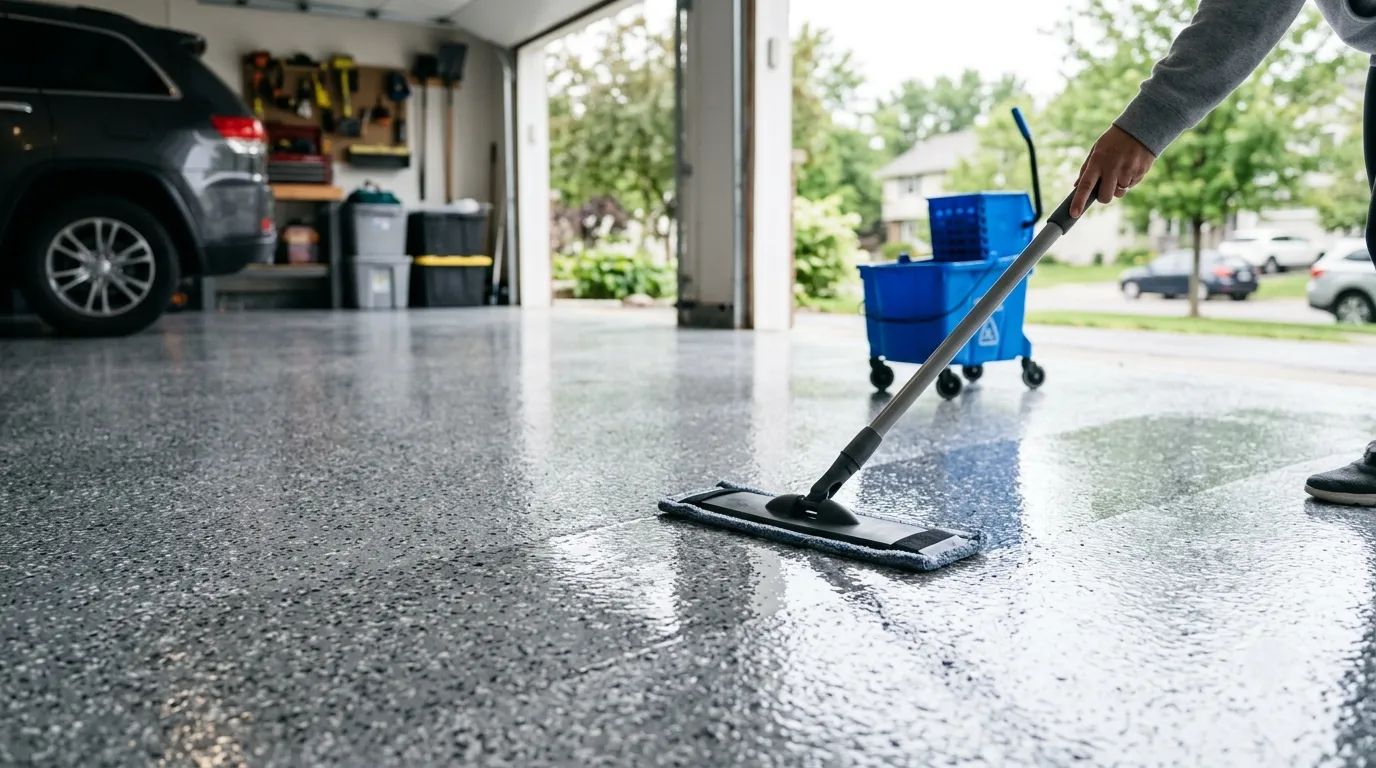
- Mop. Warm water with a little pH-neutral floor cleaner, then a clean-water rinse if the cleaner says to. That is it for normal dirt.
- Spot-clean spills promptly - the coating resists stains, but oil and chemicals left to sit are easier to deal with fresh.
Tougher jobs
- Oil and grease: a soft brush with a mild degreaser, left to dwell, then scrub and rinse.
- Tyre marks: a pH-neutral or mild degreasing cleaner and a soft brush; let it sit, scrub, rinse.
- Dried-on grime: a soft deck brush rather than anything abrasive - never steel wool or harsh pads.
What to avoid
- Acidic cleaners - citrus and vinegar-based products can dull or etch the finish.
- Strong solvents - they can soften the coating.
- Abrasive pads and steel wool - they scratch the topcoat.
- Soap-based cleaners that leave a slippery film.
Warm water and a pH-neutral cleaner handle almost everything; save the degreaser for oil.
The winter habit
Road salt and de-icer brine that drips off a car and dries on the floor will slowly dull a coating. Rinse or mop it off rather than letting it sit, and a mat under the car catches the worst. Keeping salt moving off the floor is the one winter habit worth keeping.
A few tips
- Felt pads or plywood under jack stands and kickstands stop point loads marking the floor.
- A quality topcoat makes all of this easier - it is what takes the wear, as the durability guide explains.
- If the floor is past cleaning and into peeling, the problem is the prep, not the dirt - see how to prep and recoat, and size the recoat with the calculator.
Treated gently, an epoxy floor cleans up in minutes and keeps its shine for years - the routine really is this light.
Frequently asked questions
How do you clean an epoxy garage floor?
For everyday cleaning, dust-mop or soft-broom the grit, then mop with warm water and a little pH-neutral floor cleaner. For oil or grime, scrub with a soft brush and a mild degreaser and rinse. Avoid acidic or citrus cleaners and harsh solvents, which can dull or attack the finish over time. The sealed surface does most of the work - the routine is light.
What should you not use on an epoxy floor?
Avoid acidic cleaners (anything citrus or vinegar-based), strong solvents, and abrasive pads or steel wool, which can etch or scratch the topcoat. Skip soap-based cleaners that leave a film and make the floor slippery. Stick to warm water and a pH-neutral cleaner, with a mild degreaser for oil - gentle is enough on a sealed surface.
How do I get tyre marks off an epoxy floor?
Hot-tyre marks and rubber pickup respond to a soft brush with a pH-neutral or mild degreasing cleaner and a little elbow grease; let it dwell, then scrub and rinse. A UV-stable, hard topcoat resists tyre marks far better in the first place. Avoid harsh solvents, which can soften the coating along with the rubber.
How do I protect an epoxy floor in winter?
Road salt and de-icer brine dripping off a car can dull and slowly degrade a coating, so rinse or mop salty residue off rather than letting it sit and dry. A mat under the car catches the worst of it. Keeping salt moving off the floor is the single most useful winter habit for a garage epoxy floor.