
How to Prep a Garage Floor for Epoxy
Almost every epoxy floor that peels was let down by the prep, not the paint. This guide covers the steps that make the coating bond - cleaning, profiling, the moisture test, and crack and joint repair.
By the Calculate My Reno Team / Published
Skip to the tool
Open the Garage Floor Paint & Epoxy Calculator
Preparation is the part nobody photographs and the part that decides whether your floor lasts twenty years or peels in two. Spend your effort here.
Why prep matters more than the coating
Epoxy is only as good as its bond to the concrete. A perfect coat over a dirty, sealed or damp slab will lift; an average coat over a clean, profiled, dry slab will hold. On a professional quote the preparation is often 30 to 50% of the price for exactly this reason.
The steps
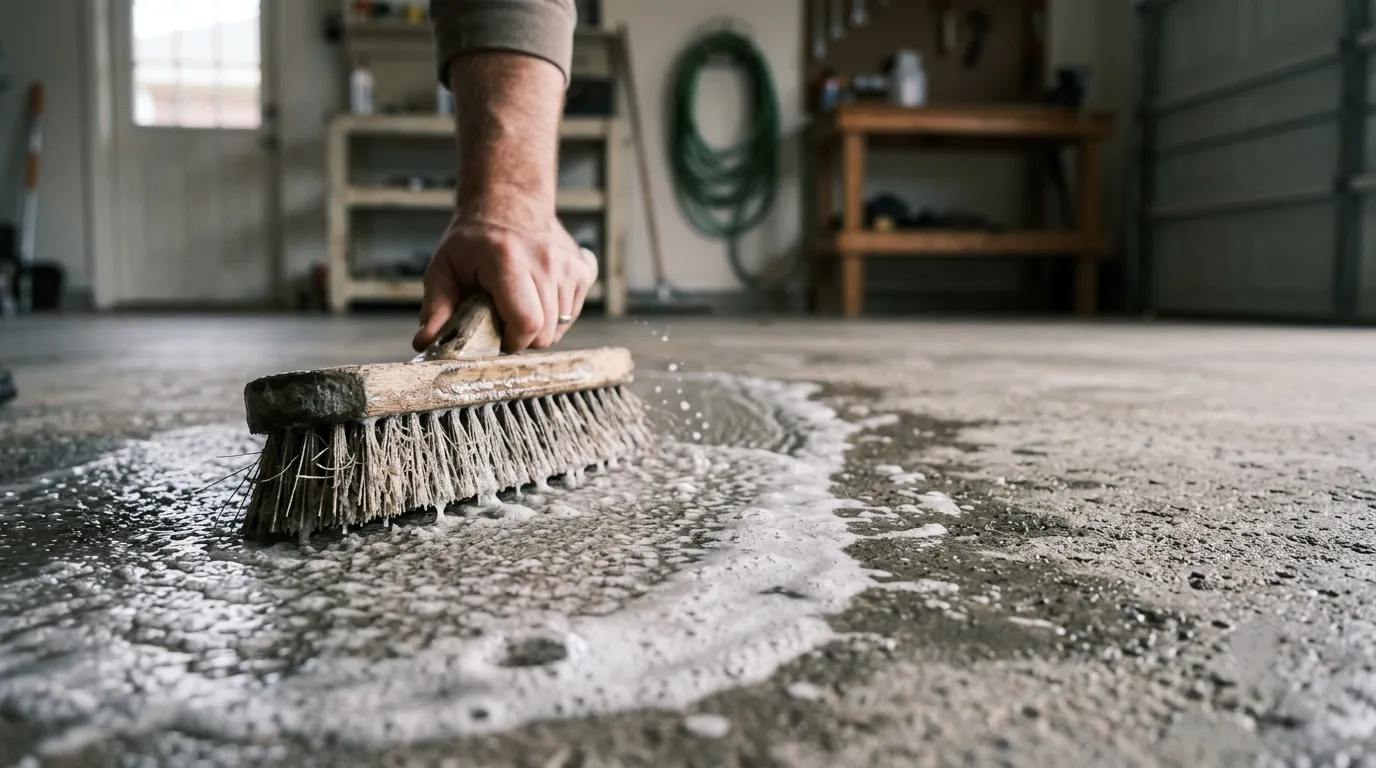
- Clear and clean. Empty the garage and sweep. Degrease the whole floor, and scrub oil and tyre stains until they are gone - epoxy will not stick over contamination.
- Profile the surface. Open the concrete so the coating can key in:
- Acid-etch smooth, bare concrete with the etch supplied in DIY kits, then rinse and let it dry. The usual home route.
- Diamond-grind for a better, more reliable profile, and the only option on sealed, painted or oil-soaked slabs. What professionals use.
- Moisture test. Tape a plastic sheet down overnight; condensation or darkened concrete means the slab is too damp to coat.
- Repair. Fill cracks and spalls, and fill or detail control joints to your product’s instructions. Let everything cure hard.
- Final clean. Vacuum up all dust - a profiled floor sheds fine grit that will spoil the bond if you coat over it.
Etch or grind?
| Acid etch | Diamond grind | |
|---|---|---|
| Best for | Smooth, bare concrete | Sealed, painted, oily or uneven slabs |
| Profile | Light, adequate for DIY kits | Stronger and more consistent |
| Effort | Lower, comes in most kits | Hire a grinder, more work and dust |
| Reliability | Good if the slab is bare | Best, what pros use |
If in doubt, grind - it deals with surfaces that etching cannot touch.
A few tips
- Test for an old sealer by dripping water on the floor: if it beads instead of soaking in, the slab is sealed and must be ground.
- New concrete must cure for about a month before coating, or moisture from the slab will spoil the bond.
- Do the moisture test even on an old slab - a garage over damp ground can wick water for years.
- Once the slab is ready, follow the step-by-step coating guide, and size your order with the calculator.
Get the slab clean, profiled and dry and the coating part is easy. Skip it and no product, however good, will save the floor.
Frequently asked questions
Do I need to etch or grind a garage floor before epoxy?
Yes - epoxy needs a profiled surface to grip. Acid-etching opens the pores of smooth, bare concrete and is the usual DIY route. Diamond grinding gives a better, more consistent profile and works on sealed or contaminated slabs where etching cannot, which is why professionals prefer it. Coating a smooth, sealed floor without profiling it is the surest way to get peeling.
How do I know if my garage floor is too damp for epoxy?
Tape a square of plastic sheet tightly to the slab and leave it overnight. If there is condensation under the plastic or the concrete has darkened in the morning, the slab is wicking moisture and is not ready - moisture will push the coating off from below. New slabs need to cure for around a month before coating, and a slab over damp ground may need a moisture-tolerant primer.
Can I epoxy over an old, sealed or painted garage floor?
Not without removing or profiling the old surface first. Epoxy bonds to bare, profiled concrete, not to a sealer or old paint - so you need to grind it off or grind through it. Diamond grinding is the reliable way to deal with a sealed or previously coated slab; acid etching will not bite through a sealer.
Should I fill the control joints and cracks before epoxy?
Fill cracks and spalled areas so the coating has a sound, level surface, and decide on the control joints to taste - many people fill them flush for a seamless look, others leave them to keep working as designed. Either way, do the repairs before you coat and let them cure, so the colour coat goes over a finished surface.