
Basement Waterproofing Cost
Waterproofing quotes come back wildly far apart, and it is almost never because one contractor is greedy. It is because they are quoting different jobs. This guide separates the four methods, shows how each is priced, and starts where every honest contractor starts - finding out where the water is actually getting in.
By the Calculate My Reno Team / Published
Skip to the tool
Open the Basement Waterproofing Cost Calculator
Waterproofing quotes come back far apart, and the reason is not usually the contractor. It is that “waterproofing a basement” describes four different jobs, and they are separated by an order of magnitude in price. Work out which one your problem needs before you compare a single number.
Start here: where is the water coming from?
Before pricing any system, check the cheap causes. A large share of wet basements are not a foundation problem at all:
- Gutters and downspouts dumping rain at the base of the wall.
- Grading that slopes toward the house instead of away from it.
- Window wells with no drainage, filling up like a bucket.
These are the cheapest fixes available and they are the first thing a good contractor will look at. If regrading and extending the downspouts dries the basement out, nothing below this line needs to be bought.
The four methods, cheapest to dearest
| Method | Priced by | Indicative rate | What it actually does |
|---|---|---|---|
| Sealant / coating | Per sq ft of wall face | $1 - $8 | Coats the inside face of the wall. Cosmetic against damp; will not hold back real water pressure. |
| Crack injection | Per crack | $250 - $800 | Fills a specific leaking crack with epoxy or urethane. Cheapest real repair - if a crack is the whole problem. |
| Interior drain tile + sump | Per linear foot of wall | $60 - $120 | Collects water under the slab and pumps it out. The common mid-range job. |
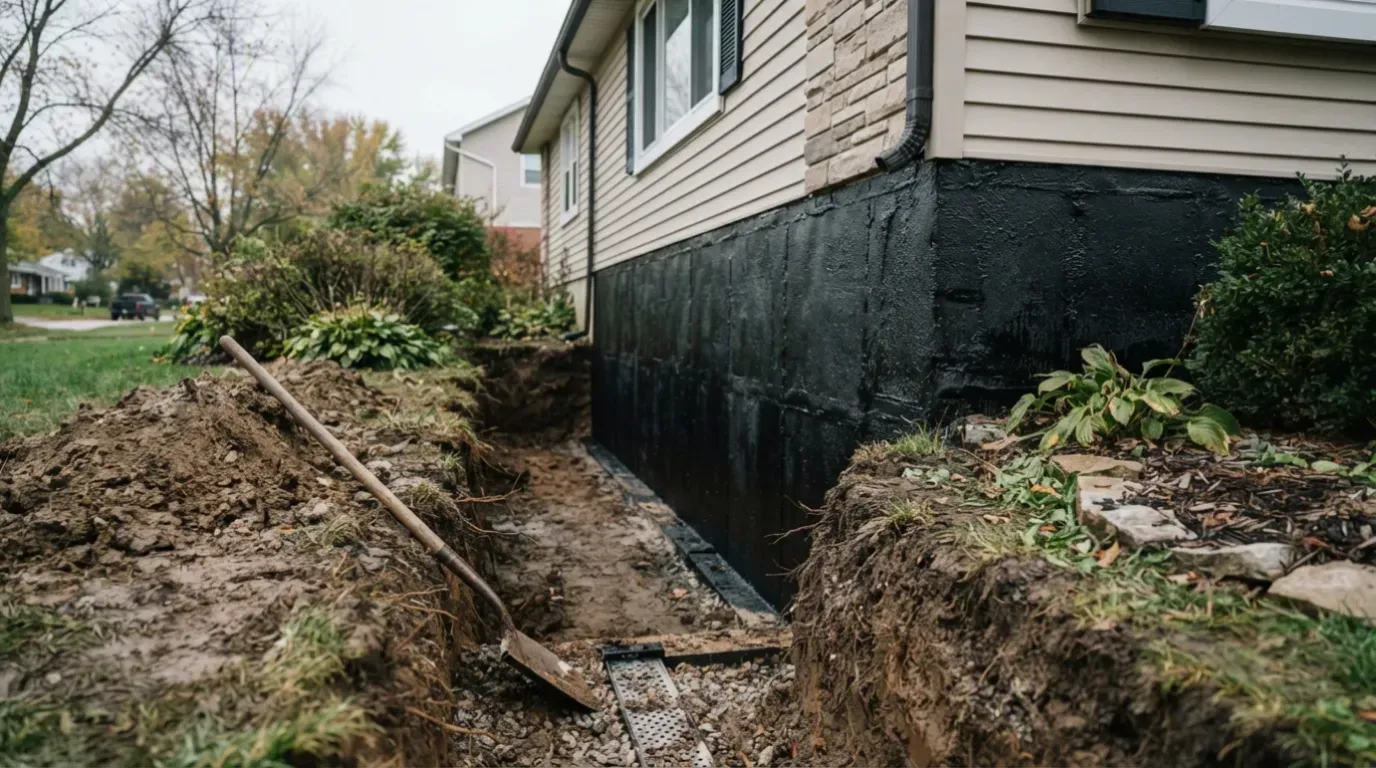
| Exterior excavation + membrane | Per linear foot of wall | $100 - $250 | Digs the foundation out and waterproofs it from outside. The most complete, and the most expensive - you are paying for the digging. |
| Sump pump, installed | Once-off | $800 - $3,000 | Where an interior system sends the water. |
| Battery backup | Once-off | $600 - $1,200 | A pump with no power during the storm is not doing anything. |
Bands are indicative 2026 US contractor ranges gathered from published cost guides (Angi, This Old House, HomeGuide, Today’s Homeowner). They are not a quote - they move with your city, your soil and your access.
The gap between the bottom and the top of that table is enormous, which is the single most useful thing to understand before you take a quote. A cheap quote and an expensive quote are often both honest - they are just different jobs.
How the price is built
waterproofing cost = linear feet of wall × method rate
                   + sump pump + discharge line (+ battery backup)
                   + tear-out and reinstatement (finished basements)
                   + excavation and spoil removal (exterior only)
Run your perimeter through the basement waterproofing cost calculator to get the linear feet and the pier or drain lengths, then price each line locally. Rates move by market and by access - a walk-out basement on open ground is a very different dig from a foundation with a driveway, a deck and a mature tree over it.
Access is the hidden variable in an exterior job. Two identical houses can be far apart on price because one has a machine-width path to the wall and the other does not.
What moves the total
- The method. Bigger lever than everything else combined. See the table.
- Linear feet, not square feet. These systems are priced along the wall, so a long perimeter costs more than a deep one.
- A finished basement. Interior drain tile goes in under the slab at the wall - which means the finished wall, the flooring and anything built against it comes out first, and goes back afterward. On a finished basement this can rival the waterproofing itself.
- Depth and access on exterior work, because both are really about how much digging.
- The sump pump and its discharge. Its own line, and worth a battery backup if your power goes out in the storms that flood you.
Worked example
A house with a 120 ft foundation perimeter, water coming in along one 30 ft wall:
- Diagnose first. If it is one wall and one visible crack, price crack injection on that crack before anything else.
- If it is seepage along the whole wall, the realistic job is interior drain tile on that 30 ft run - not all 120 ft. You do not automatically pay for the whole perimeter; you pay for the run that leaks, plus whatever the contractor argues will leak next.
- 30 lf × $60-$120 = roughly $1,800 - $3,600 for the drain, plus the sump pump ($800 - $3,000), the discharge line and a backup ($600 - $1,200).
- If the basement is finished, add the tear-out and reinstatement of that wall.
- Only price the exterior job if the interior system will not solve it - a bowing or structurally failing wall is a foundation repair question, not a waterproofing one.
The lesson in that example is step 2: the perimeter is not the quote. A contractor pricing all 120 ft when 30 ft leaks should be asked why.
Where waterproofing quotes go wrong
- Comparing an interior quote to an exterior quote as though they are the same job. They are not.
- Buying a coating for a water-pressure problem. A sealant on the inside of a wall does not hold back a hydrostatic head. It hides the stain.
- Skipping the diagnosis. The gutter and the grading are free to check and are a real cause.
- Forgetting the finished basement comes out. It is a real line and it surprises people.
- No battery backup. The pump fails in the storm that needed it.
If the wall is cracked, bowing or moving rather than simply wet, you are looking at foundation repair cost instead. And if the basement has been wet for a while, read mold remediation cost - the water has to be stopped before the mold work is worth paying for.
Frequently asked questions
How much does it cost to waterproof a basement?
There is no single answer, because "waterproofing" covers four different jobs at four very different prices. Interior drain tile with a sump runs about $60 to $120 per linear foot of wall and is the common mid-range job. Exterior excavation and membrane is roughly $100 to $250 per linear foot, because you are paying for the digging. Crack injection is about $250 to $800 per crack and is the cheapest real repair if a crack is the whole problem. An interior sealant is $1 to $8 per sq ft and is the least likely to solve an actual water-pressure problem. Get your wall run first, then price the method your problem calls for.
Why are basement waterproofing quotes so different?
Usually because they are not quoting the same work. One contractor may price a sealant on the inside of the wall while another prices excavating the outside of it, and those are not comparable numbers. Before comparing quotes, make each one tell you the method, the linear feet covered, whether a sump pump and discharge line are included, and what happens to a finished wall or floor that has to come out first.
Is interior or exterior waterproofing better?
Exterior is the more complete fix - it keeps water out of the wall rather than managing it once it is in - but it means excavating around the foundation, which is why it costs the most. Interior drain tile does not stop water entering the wall; it collects it below the slab and pumps it away. For most homes the interior system is what actually gets installed, because it is a fraction of the cost and it solves the symptom the homeowner cares about: a dry floor.
Do I need a sump pump?
An interior drain system needs somewhere to send the water, and that is the sump pump. Price it as its own line, along with the discharge line and, if you lose power in storms, a battery backup - a sump pump with no power during the storm that floods you is not doing anything. Exterior systems may not need one at all if the ground drains away from the house.
Can I fix a wet basement myself?
Sometimes, and it is worth ten minutes of your time to check before you spend anything. A surprising share of wet basements are caused by gutters dumping at the foundation, a downspout that ends too close to the wall, or ground that slopes toward the house. Fixing the grading and moving the water away is cheap, and if that dries the basement out, you have just avoided the whole conversation.