
Foundation Repair Cost
Foundation repair is the most frightening quote a homeowner gets, and a good share of the cracks that trigger it are not structural. This guide separates the problems that need piers from the ones that need caulk, and shows how each repair is actually priced.
By the Calculate My Reno Team / Published
Skip to the tool
Open the Basement Waterproofing Cost Calculator
Foundation repair produces the scariest quote in home ownership, and the first thing worth knowing is that a great many cracks do not need it. Concrete cracks as it cures. The question is never “is there a crack” - it is “is the foundation moving.”
First: is it structural at all?
Not every crack is a problem, and telling the difference is what separates a caulk job from a five-figure one.
| Usually not structural | Take seriously |
|---|---|
| Fine vertical or hairline cracks | Horizontal cracks - the wall is being pushed in |
| Even, narrow shrinkage cracks | Cracks noticeably wider at one end |
| Cracks that have not changed in years | Stair-step cracking through block joints |
| Cracks that are actively moving or growing | |
| Doors and windows that have stopped closing; sloping floors |
The people best placed to tell you are structural engineers, and they are not the people selling piers. An independent report costs a fraction of an underpinning job, tells you whether you need one at all, and gives you a written specification that competing contractors have to bid against. Without it you are comparing quotes for work nobody has defined.
The repairs, and how each is priced
| Repair | Priced by | Indicative rate | The problem it solves |
|---|---|---|---|
| Crack injection | Per crack | $250 - $800 | A specific crack - epoxy for structural, urethane for water. |
| Concrete / pressed pier | Per pier | $1,000 - $3,000 | Settlement, on lighter or shallower jobs. |
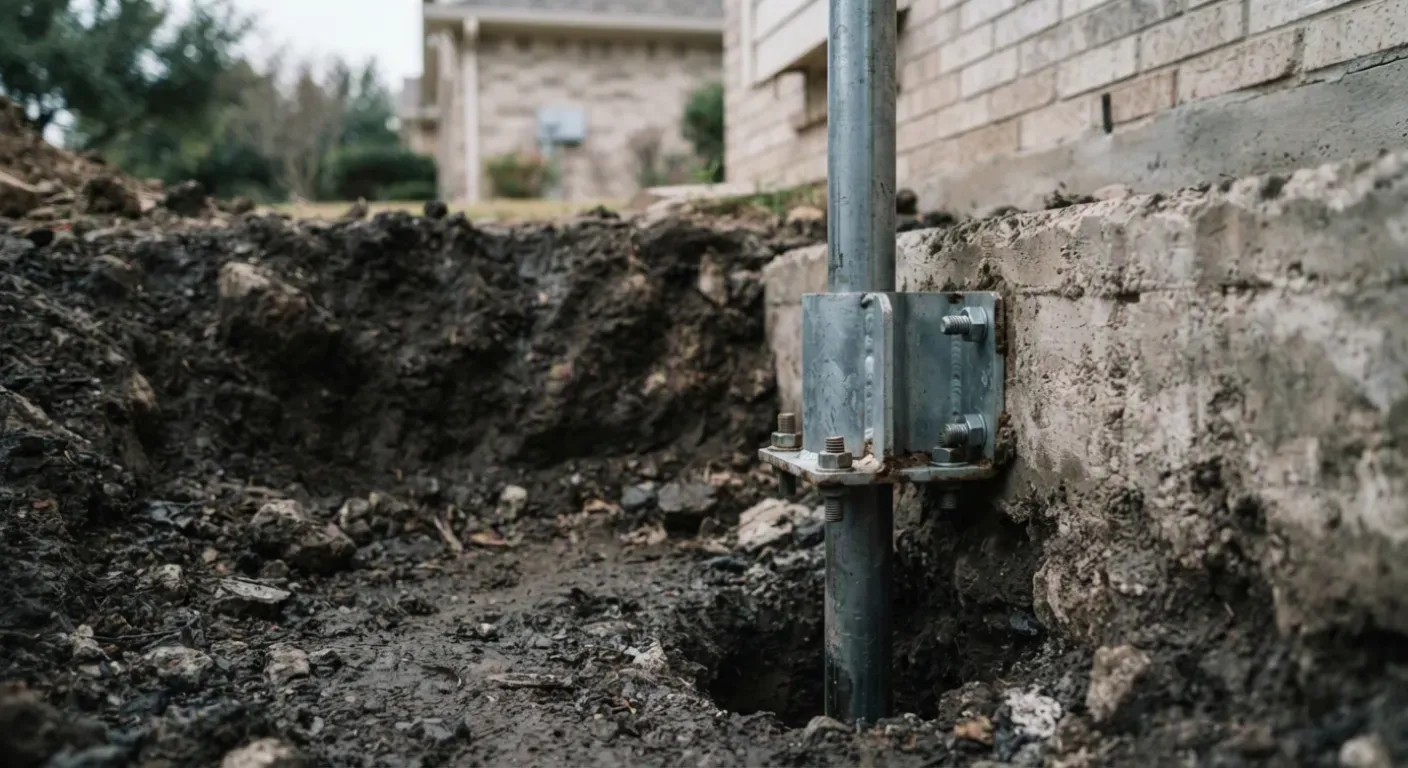
| Steel push pier | Per pier | $1,500 - $3,500 | Settlement - the footing has sunk. Driven to load-bearing soil. |
| Helical pier | Per pier | $2,000 - $4,000 | Settlement, screwed rather than driven - often for lighter loads or poor soil. |
Bands are indicative 2026 US contractor ranges from published cost guides (Angi, This Old House, HomeGuide, Today’s Homeowner). They are not a quote. A bowing wall pushed in by soil pressure is a different repair again - carbon fiber straps or wall anchors, priced per strap or per anchor - and confusing it with settlement is one of the more expensive mistakes here.
How a pier quote is built
Piering is the big one, and it is priced per pier, so the count is the quote:
piers = ceil(affected wall length ÷ pier spacing) + 1

foundation repair cost = piers × rate per pier
                       + engineer's report
                       + excavation and access
                       + interior finishes removed and reinstated
Two numbers set the price: how long the failing section is, and how far apart the piers go - which the engineer specifies, not the salesman. Run it through the foundation repair cost calculator to get the pier count, then price it locally.
Depth is the variable you cannot see. A pier is driven until it reaches soil that will carry the load. Two houses on the same street can differ because one hits competent soil sooner than the other - which is also why a fixed per-pier price sometimes carries a depth allowance, and why you should ask what happens if it goes deeper.
What moves the total
- The number of piers, which is the length of the failure, not the length of the house.
- Pier depth, which nobody knows precisely until they drive one.
- Access. Interior piers mean breaking the slab and working inside; exterior piers mean digging. Both add.
- What has to come out. Finished basement walls, flooring, landscaping, a patio, a deck.
- Whether it is settlement or lateral pressure. A bowing wall is a different repair from a sinking one - straps and anchors, not piers - and confusing them is expensive.
Worked example
An engineer’s report specifies underpinning along a 24 ft section of failing wall at 6 ft pier spacing:
- Piers: ceil(24 ÷ 6) + 1 = 5 piers. Four spans, five piers - miss the end pier and you are several thousand dollars light.
- 5 × $1,500-$3,500 with push piers = roughly $7,500 - $17,500, which is the bulk of the quote.
- Add the engineer’s report - already spent, and the reason the other four lines are honest.
- Add access: breaking and repouring slab for interior piers, or excavation for exterior.
- Add reinstatement of anything removed to get at the wall.
Note what is not in that list: the other three walls. You pay for the failure, not the perimeter. If a quote piers the whole house, ask the engineer whether the whole house is moving.
Where foundation quotes go wrong
- Buying piers for a shrinkage crack. The most expensive mistake available here.
- Letting the contractor do the diagnosis. Ask the person who does not sell the cure.
- Accepting a quote with no pier count or spacing. That is not a quote, it is a number.
- Ignoring the water. Soil movement is usually driven by water - if the ground around the foundation is badly drained, fixing the foundation without fixing the drainage invites it back. See basement waterproofing cost.
- Assuming insurance covers it. Gradual settlement is typically excluded.
If the wall is simply wet rather than moving, you want basement waterproofing, which is a much smaller conversation.
Frequently asked questions
How much does foundation repair cost?
It depends entirely on which repair you need, and those are far apart. Foundation repair is priced per pier, not per job: a steel push pier is about $1,500 to $3,500 installed, a helical pier $2,000 to $4,000, and a concrete or pressed pier $1,000 to $3,000. The pier count comes from the wall - piers equals ceil(wall length divided by spacing) plus one, with spacing usually 5 to 8 ft - so a 24 ft settling wall at 6 ft centres needs 5 piers, roughly $7,500 to $17,500 with push piers. Most homes need somewhere between 5 and 10. But the single most useful thing you can do before spending any of it is establish whether the foundation is actually moving, because a large share of cracks are not structural.
Are all foundation cracks serious?
No, and this is the most expensive misunderstanding in the category. Concrete shrinks as it cures, and fine vertical or hairline cracks are extremely common and usually not structural. The ones that warrant real concern are horizontal cracks, cracks wider at one end, stair-step cracks in block, wide cracks you can fit a coin into, and any crack that is actively moving or accompanied by doors that stop closing and floors that slope. If in doubt, pay a structural engineer rather than asking a contractor who sells piers.
How are foundation piers priced?
Per pier. The count comes from the length of the affected wall and the spacing the engineer specifies - roughly, piers equals the wall length divided by the spacing, plus one. So the two numbers that set your price are how long the failing section is and how far apart the piers go. Push piers and helical piers are priced differently, and depth matters, because a pier is driven until it reaches load-bearing soil.
Should I get a structural engineer first?
Usually, yes, and it is the best money in this whole category. An engineer does not sell you piers - they tell you whether you need them, how many, and where. A few hundred dollars on an independent report is small against a five-figure underpinning quote, and it gives you a specification that competing contractors can bid against, which is the only way to compare their numbers honestly.
Does homeowners insurance cover foundation repair?
Usually not for gradual settlement, which is what most foundation repair is - policies typically exclude earth movement and normal settling. It may cover damage from a specific covered event, such as a burst pipe washing out soil beneath the footing. Read the policy rather than assuming either way, and do not let a contractor tell you what your insurer will pay.