
Types of Deck Tiles Compared
Interlocking deck tiles come in composite, real wood, plastic and rubber, in a handful of sizes and pack counts. Here is how the materials compare on looks, durability and cost, and how to pick the right one for your balcony or patio.
By the Calculate My Reno Team / Published
Skip to the tool
Open the Deck Tile Calculator
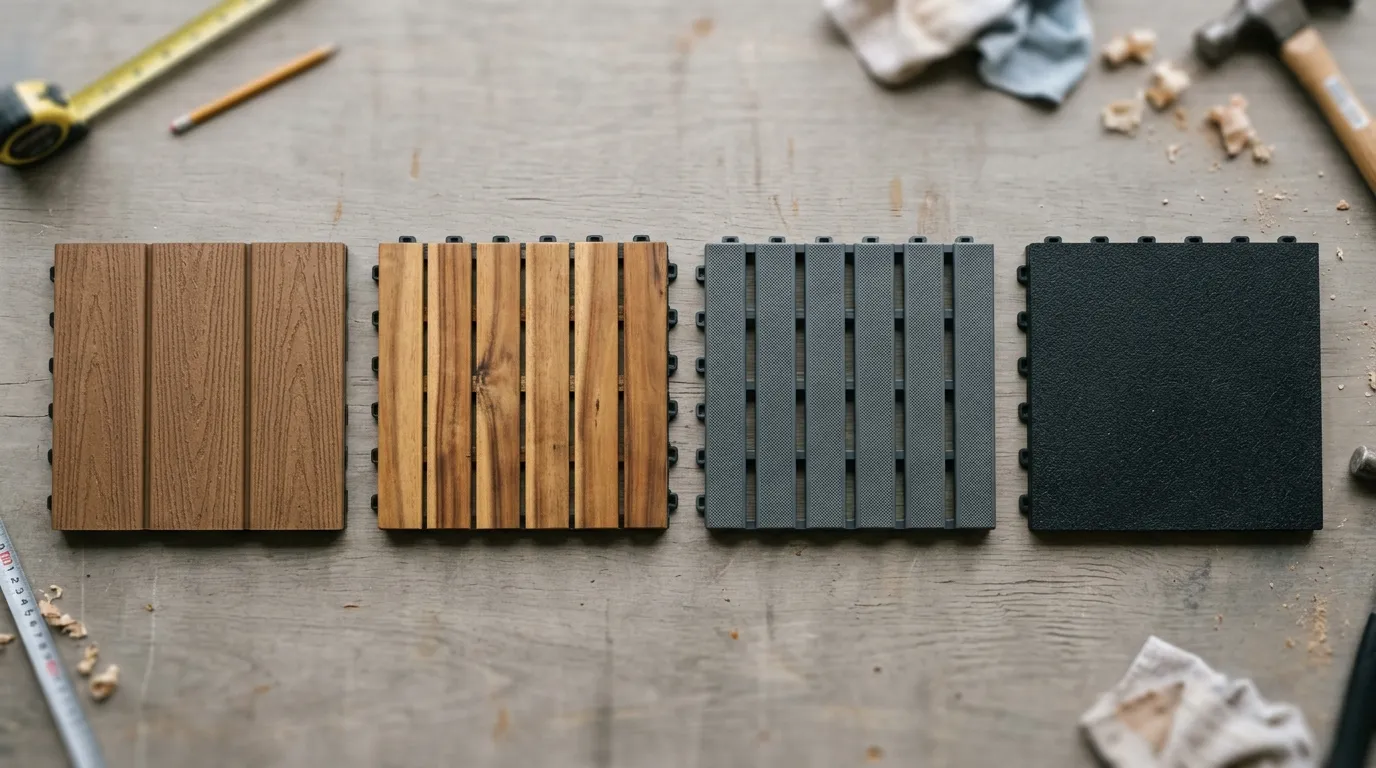
Every interlocking deck tile works the same way - a square panel on a snap-together backing grid - so the choice between them is really a choice of material. Composite, wood, plastic and rubber look different, last differently and cost differently. Here is how they compare.
The four materials
| Material | Look & feel | Upkeep | Cost | Best for |
|---|---|---|---|---|
| Composite (WPC) | Wood-like, uniform | Very low - no oiling | Mid | Balconies, patios, low-effort floors |
| Wood (acacia etc.) | Natural, warm | Oil every 1-2 years | Mid | A real-timber look |
| Plastic / PVC | Slatted or grate | None | Lowest | Budget, temporary, wet areas |
| Rubber | Soft, matte | Low | Mid-high | Gyms, rooftops, poolsides, play areas |
Composite is the default for most balconies and patios: a wood-plastic blend that looks like timber but does not need oiling, does not rot, and holds its colour. Wood tiles - usually acacia or another hardwood - look and feel the most natural, but the timber greys and needs re-oiling to stay looking new. Plastic is the cheapest and lightest, great for a rental balcony or a temporary floor, though budget ones can fade and turn brittle in strong sun. Rubber is the specialist: soft, grippy and tough, for gym floors, roof decks and around pools.
Common sizes and pack counts
Most tiles are a 12-inch (300 mm) square, but the size and pack count vary by brand - and both feed straight into how many you buy:
| Tile | Size | Coverage | Typical pack |
|---|---|---|---|
| Standard composite / wood | 12 × 12 in (300 mm) | 1 sq ft (0.09 m²) | 6, 10 or 11 |
| IKEA Runnen | 13 in (330 mm) | 0.11 m² | 9 (1 m²) |
| Large-format composite | 12 × 24 in (300 × 600 mm) | 2 sq ft (0.18 m²) | 5 or 6 |
| Budget plastic | 12 × 12 in (300 mm) | 1 sq ft (0.09 m²) | up to 44 |
Read the size and count off the pack and put them into the deck tile calculator - the same area needs very different pack numbers depending on which tile you pick. See how many deck tiles do I need for the method.
Brands you will see
The market is a mix of one or two well-known names and a lot of unbranded packs:
- IKEA Runnen - the cheap, ubiquitous starter tile, in wood, composite and plastic-grate forms.
- NewTechWood, Golden Select and similar - mid-range composite tiles in wood-grain finishes.
- Acacia hardwood tiles - sold under many labels, all broadly similar slatted timber squares.
- Unbranded plastic and rubber - big-box and online multipacks, sold mainly on price.
Whichever you choose, the install and the math are the same - only the look, the lifespan and the pack count change.
How to pick
- Low-effort balcony or patio → composite. Set it and forget it.
- You want real wood → acacia or hardwood, and accept the yearly oiling.
- Rental, temporary or tight budget → plastic. Lift it and take it with you.
- Gym, rooftop, poolside or kids’ area → rubber, for grip and cushioning.
A few tips
- Buy one batch and one colour run - every material varies slightly between production lots.
- For wood, budget for oil and an annual hour of upkeep; for plastic in full sun, expect some fading over the years.
- Whatever the material, the floor only lasts as long as the surface under it drains - see can you put deck tiles on grass for the base prep.
- Picked one? Size the order with how many deck tiles do I need, then lay it with how to install deck tiles.
Frequently asked questions
What are interlocking deck tiles made of?
The four common materials are composite (wood-plastic blend, the most popular for its low upkeep), real wood (usually acacia or another hardwood, for a natural look), solid plastic or PVC (the cheapest and lightest), and rubber (soft and grippy, used on gym floors, rooftops and around pools). All share the same snap-together backing grid, so the choice is about looks, durability and price rather than how they install.
Are composite or wood deck tiles better?
Composite tiles need almost no maintenance - they do not need oiling, resist rot and hold their colour - which makes them the easy choice for a balcony you want to forget about. Real wood tiles like acacia look and feel warmer and more natural, but the timber greys and needs oiling every year or two to keep its colour and resist the weather. Pick composite for low effort, wood for the natural look if you do not mind the upkeep.
What is the IKEA deck tile called?
IKEA's interlocking deck tile is the Runnen, sold in packs of 9 that cover 1 square metre, in wood, composite and plastic-grate versions. It is one of the most searched-for deck tiles because it is cheap and widely available, but it works the same as any other brand - a square that clips to its neighbours - so the quantity math is identical whichever you buy.
How long do deck tiles last?
It depends on the material and the climate. Good composite tiles last 10-20 years with almost no care. Hardwood tiles last a similar time if you oil them, less if you let them weather untreated. Budget plastic tiles can become brittle and fade after a few years in strong sun. Rubber is extremely durable underfoot. In all cases, keeping the surface beneath them draining and clearing leaves from underneath extends their life.