
How Much Does a Concrete Block Weigh?
A standard 8 × 8 × 16 in hollow concrete block weighs about 28-38 lb (13-17 kg) depending on the aggregate. Here is the weight by block size, hollow versus solid and normal versus lightweight, plus how to work out the weight of a whole pallet or wall.
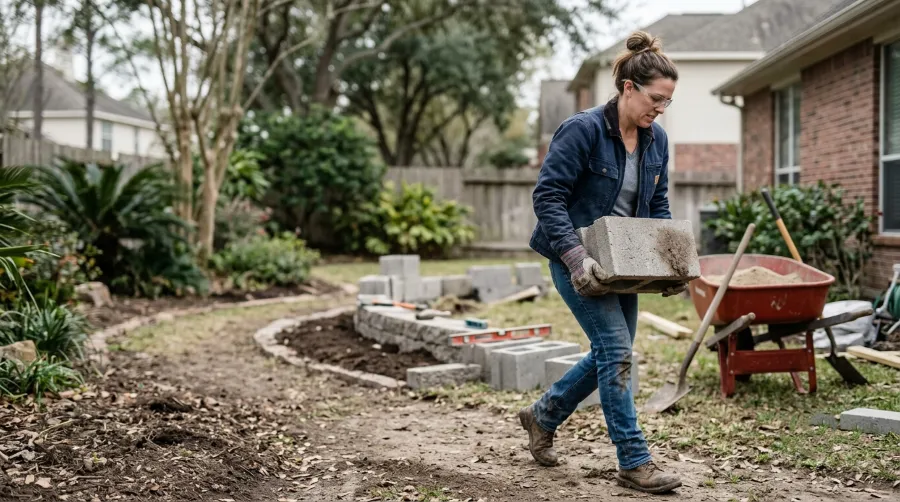
By the Calculate My Reno Team / Published
Skip to the tool
Open the Concrete Block Calculator
A standard 8 × 8 × 16 in hollow concrete block weighs about 28-38 lb (13-17 kg). The weight does not change the count you need - that is set by the block size and the wall area - but it matters a lot for delivery, handling and what your structure can carry.
Skip the math
The concrete block calculator gives you the block count for your wall; multiply that count by the per-block weight below to get the total weight of the order. This guide is the weight figures and how to use them.
Why the weight varies
Two things move the number:
- Aggregate - a normal-weight (dense) block uses sand-and-gravel aggregate and is heavy; a lightweight block uses expanded shale, clay or slag and is 20-30% lighter for the same size. Most spec sheets quote both.
- Hollow vs solid - a standard block is hollow (two or three cores), which is what keeps it liftable. A solid (or solid-bottom) block of the same size has far more material and weighs roughly 1.4-1.6× as much.
Concrete block weight by size
Typical weights for hollow CMU, normal-weight aggregate (lightweight is about 20-30% less):
| Block (nominal) | Hollow weight | Notes |
|---|---|---|
| 4 × 8 × 16 in | ~22-28 lb (10-13 kg) | partition / veneer |
| 6 × 8 × 16 in | ~22-30 lb (10-14 kg) | lighter walls |
| 8 × 8 × 16 in | ~28-38 lb (13-17 kg) | standard wall block |
| 10 × 8 × 16 in | ~38-46 lb (17-21 kg) | thicker walls |
| 12 × 8 × 16 in | ~45-55 lb (20-25 kg) | foundations, tall walls |
| Half block (8 × 8 × 8 in) | ~14-19 lb (6-9 kg) | corners / openings |
| Solid 8 × 8 × 16 in | ~40-50 lb (18-23 kg) | cap / bearing block |
The face is the same 8 × 16 in on the 4-12 in blocks (so they all count the same per area - see concrete block sizes); the width is what drives the weight up.
Metric block weights
| Block | Normal weight | Lightweight |
|---|---|---|
| 390 × 190 × 190 mm hollow | ~17-20 kg | ~13-15 kg |
| UK 440 × 215 × 100 mm dense | ~18-22 kg | — |
| UK 440 × 215 × 100 mm aircrete | — | ~7-10 kg |
UK aircrete (autoclaved aerated) block is the outlier - a 440 × 215 × 100 mm aircrete block is only 7-10 kg, less than half a dense block, which is why it is the common choice for the inner leaf of a cavity wall.
Working out the total weight
Two figures you will actually want:
- Whole order / wall - block count × per-block weight. A 200 sq ft wall is about 225 standard 8 in blocks; at ~35 lb that is roughly 7,900 lb (3,600 kg) of block, before the mortar and any grout fill.
- Per pallet - a cube of standard 8 in block is usually 70-90 units, so about 2,500-3,200 lb (1,150-1,450 kg) - over a ton per pallet. Check the delivery access and what the slab, trailer or scaffold can take.
A note on lifting
A 35 lb block, lifted a few hundred times in a day, is a real load on the back and the wrists. For a big job, plan the stacking close to the wall, swap to a lightweight unit where the structure allows, and split a 12 in course over more breaks. For the counts that feed all of this, see how many concrete blocks do I need.
Frequently asked questions
How much does a standard concrete block weigh?
A standard 8 × 8 × 16 in hollow concrete block weighs about 28 to 38 lb (roughly 13 to 17 kg). The lighter end is a lightweight-aggregate block; the heavier end is a normal-weight (dense) block. A solid 8 in block is heavier, around 40 to 50 lb. The exact figure is on the supplier's spec sheet for the unit you buy.
How much does a cinder block weigh?
Cinder block and concrete block (CMU) are the same product for weight purposes: a standard 8 × 8 × 16 in hollow unit is about 28 to 38 lb (13 to 17 kg). The original "cinder" blocks made with coal ash were a little lighter than modern dense concrete block, but today the name is just an older word for the same masonry unit.
How much does a 12 inch concrete block weigh?
A 12 × 8 × 16 in hollow block weighs roughly 45 to 55 lb (about 20 to 25 kg) - heavier than an 8 in block because it has more material in the wider webs and shell. A 6 × 8 × 16 in block is lighter, around 22 to 30 lb. The face is the same 8 × 16 in on all of them; the width is what changes the weight.
How much does a pallet of concrete blocks weigh?
A pallet (or cube) of standard 8 in block is usually 70 to 90 blocks, so at about 35 lb each it weighs roughly 2,500 to 3,200 lb - well over a ton. That matters for delivery access and for what your floor, trailer or scaffold can carry. Multiply the block count from the calculator by the per-block weight to get your own total.
How do I work out the weight of a block wall?
Multiply the number of blocks by the weight of one block. Get the block count from the wall area (about 112.5 standard blocks per 100 sq ft, or 12.5 per m²), then multiply by the per-block weight for your size - say 35 lb for a standard 8 in hollow block. A 200 sq ft wall is about 225 blocks, so roughly 7,900 lb of block before the mortar and any grout fill.