
St. Augustine Grass
St. Augustine is the broad-bladed, shade-tolerant lawn of the warm, humid South. The first thing to know: there is no St. Augustine seed worth buying - it is laid as sod or plugs. Here is how to choose a variety and look after it.
By the Calculate My Reno Team / Published
Skip to the tool
Open the Turf & Grass Seed Calculator
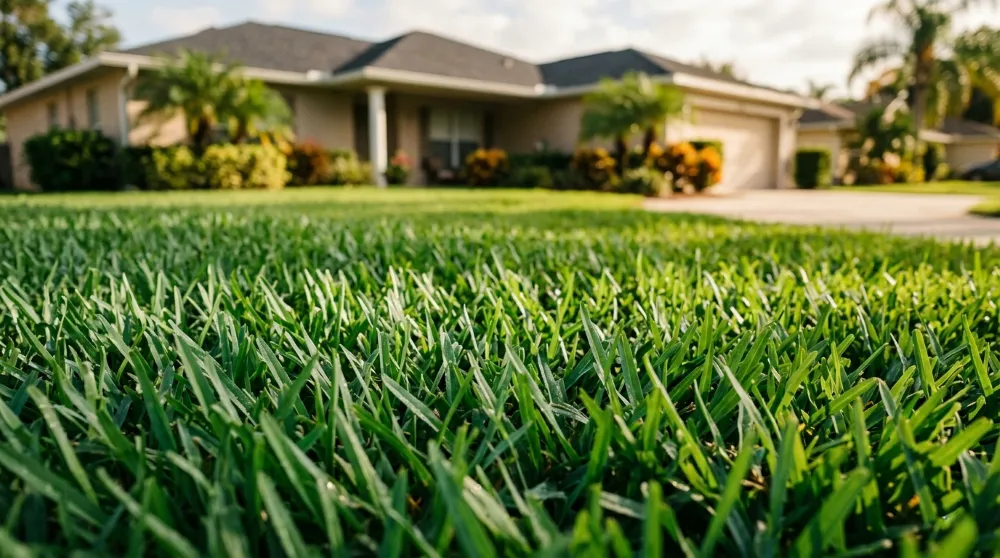
St. Augustine (Stenotaphrum secundatum) is a warm-season grass prized across the South for its thick, carpet-like cover, broad blue-green blades and willingness to grow in part shade where other warm-season grasses thin out. It spreads by above-ground runners called stolons.
It is laid, not sown
The single most important thing to know is that St. Augustine does not produce viable seed. You will not find genuine St. Augustine seed for sale - it is established from sod, plugs or sprigs, then left to knit together by its runners. That makes it a sod-first grass: to work out a lawn, run it through the sod calculator and order by the pallet, or buy plugs and space them out to fill in over a season.
The main varieties
| Variety | Best for | Notes |
|---|---|---|
| Floratam | Full sun | Vigorous and heat-tolerant; poor shade and cold tolerance |
| Palmetto | Shade tolerance | The best-selling variety worldwide; handles 4-5 hours of sun |
| CitraBlue | Shade + colour | Deep blue-green, good disease resistance |
| Seville | Shade tolerance | Dwarf, fine-textured, good in part shade |
| Raleigh | Cold hardiness | The pick where winters bring frequent hard freezes |
Floratam is the classic high-sun choice, but if any part of your lawn is shaded, a shade-tolerant variety like Palmetto, CitraBlue or Seville will hold up far better.
Shade, sun and climate
St. Augustine tolerates more shade than any other warm-season grass, which is much of its appeal - but “shade-tolerant” still means a few hours of direct sun, not deep shade. It is a heat-lover suited to the Gulf Coast and Southeast, tolerates salt spray near the coast, and greens up into a dense lawn in humidity. Its weakness is cold: hard frost can damage it, so the cold-hardy Raleigh is the safer choice in marginal areas.
Care basics
- Mow high - around 3.5 to 4 inches - to keep it dense and shade out weeds.
- Water deeply and infrequently once established, rather than little and often.
- Watch for chinch bugs and grey leaf spot, the two problems St. Augustine is most prone to in heat and humidity.
- Feed through the growing season, easing off before dormancy in cooler areas.
Sodding a St. Augustine lawn
Because it comes as turf, the planning is the same as any sod job: prepare a clean, level bed, top up low spots with topsoil, and lay the pieces within a day of delivery. Use how much sod do I need for the pallet count, and how much does sod cost to budget - St. Augustine sits at the premium end of the sod price range. Considering a tougher, finer alternative? Compare it with Zoysia grass.
Frequently asked questions
Can you grow St. Augustine grass from seed?
Not practically. St. Augustine does not produce commercially viable seed, so there is no real St. Augustine seed on the market - it is established from sod, plugs or sprigs instead. If you want a St. Augustine lawn you lay it as finished turf or plant plugs and let it spread by its runners (stolons). Anything sold as "St. Augustine seed" is best treated with suspicion.
What is the most shade-tolerant St. Augustine grass?
St. Augustine is already the most shade-tolerant warm-season grass, and Palmetto, CitraBlue and Seville are its most shade-tolerant varieties - performing on roughly 4 to 5 hours of direct sun, with some newer cultivars managing a little less. Floratam, by contrast, needs near full sun. If your lawn is partly shaded, choose one of the shade-tolerant varieties rather than Floratam.
Where does St. Augustine grass grow best?
It thrives in the warm, humid climates of the Gulf Coast and the Southeast - Florida, the Gulf states, coastal Texas and similar regions - where it makes a thick, carpet-like lawn. It is a warm-season grass that loves heat and tolerates salt and some shade, but it is sensitive to hard frost, so the more cold-hardy Raleigh is preferred where winters bring frequent freezes.