
Blown-In vs Batt Insulation
Batts and blown-in are the two ways most homes get insulated, and they are bought and installed completely differently. Here is how they compare on coverage, R-value and cost, and which to reach for in walls, attics and finished cavities.
By the Calculate My Reno Team / Published
Skip to the tool
Open the Loft & Wall Insulation Calculator
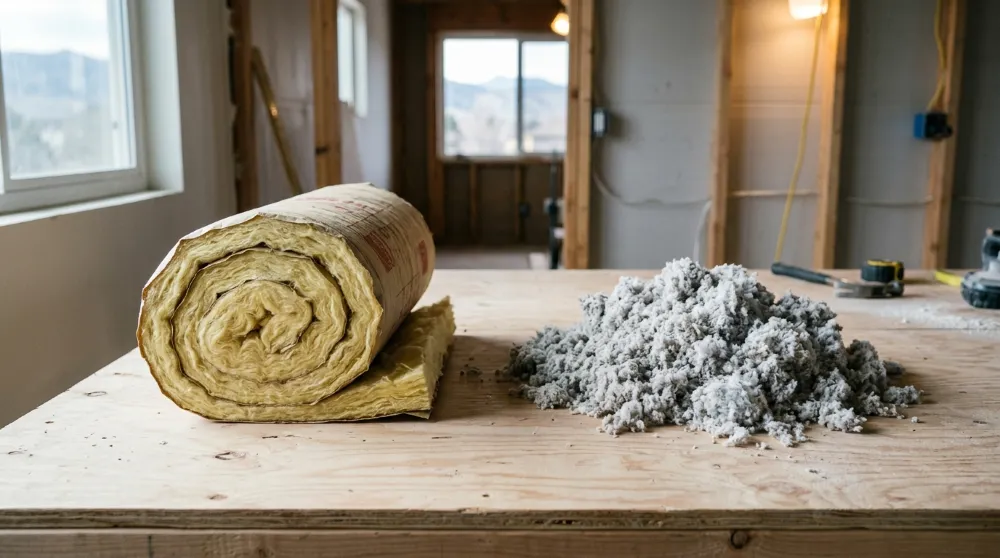
Batts and blown-in are the two everyday insulation formats. They hit the same R-values but are bought, priced and installed in completely different ways, so the right pick depends on what you are insulating.
The quick comparison
| Batts / rolls | Blown-in (loose fill) | |
|---|---|---|
| Form | Pre-cut or rolled blankets | Loose fibre, blown or poured |
| Best for | Open stud / joist bays | Attics, finished cavities |
| Install | DIY with a knife | Blower (often a store loaner) |
| Fills around wires/pipes | Poorly - needs cutting | Very well |
| Sold by | Bag of a fixed face area | Bag of a fixed yield |
| R-value per inch | ~R-3.1 (fibreglass) | ~R-2.5 fibreglass / R-3.5 cellulose |
| Settles? | No | Yes - rated at settled depth |
| Main cost driver | Material + offcut waste | Material + blower hire |
How each is estimated
The area math is the same - net area, divided by coverage per bag, rounded up - but the coverage behaves differently:
bags = ceil( net area × wastage ÷ coverage per bag )
- Batts: a bag covers a roughly fixed face area (an R-13 bag ~106 sq ft, an R-19 bag ~75 sq ft). Wastage ~10% for cuts.
- Blown-in: a bag has a fixed yield, so coverage falls as the R-value rises (R-30 ~60 sq ft, R-49 ~37 sq ft). Wastage ~5%, since it is poured to fill.
The insulation calculator switches the default coverage when you change the type, and counts the individual batts for batt mode.
Fibreglass vs cellulose for blown-in
If you are going blown-in, the two loose fills are:
- Fibreglass - lighter, does not soak up water, slightly lower R per inch so it needs a touch more depth. Easier on an old ceiling.
- Cellulose - recycled paper, denser, blocks air better and packs more R-value into less depth. Heavier, and it can settle more.
Both are fine in a vented attic. Cellulose wins on air-sealing, fibreglass on weight.
Cost: which works out cheaper?
For materials alone the two are usually close, and the cheaper one shifts by product and region. The real difference is the labour and kit: batts click into open bays with just a knife, so a DIY batt job is mostly material, while blown-in adds a blower (often a free loan with a bulk-bag purchase, or a day’s hire) plus the time to set it up - but it covers an open attic far faster than cutting batts to every joist. Rather than a baked-in average, price your own job in the insulation calculator: enter a price per bag for a material total, or an installed rate to weigh up a fitter’s quote. Factor blown-in’s blower hire and batts’ offcut waste into the comparison.
Which to use where
- Attic - blown-in, almost always. See how much attic insulation do I need.
- Open new walls / floors - batts, cut to the bay.
- Finished walls you can’t open - dense-pack blown-in through small holes.
- Around lots of wiring and plumbing - blown-in, or batts split carefully around the runs.
For the full method and a bag count either way, see how much insulation do I need.
Frequently asked questions
Is blown-in or batt insulation better?
Neither is better everywhere. Blown-in fills around obstructions and is the fast choice for open attics, but it needs a blower and settles over time. Batts are cheap, DIY-friendly and ideal for open stud or joist bays, but they leave gaps if cut sloppily or stuffed around wires. Use blown-in for attics and finished cavities, batts for accessible framing.
Is cellulose or fibreglass blown-in better?
Cellulose is denser, blocks air a little better and has a slightly higher R-value per inch (about R-3.5 vs R-2.5 for fibreglass), so it needs less depth for the same R-value. Fibreglass is lighter, does not absorb water, and weighs less on a ceiling. Both work well blown into an attic; cellulose is the better air-blocker, fibreglass the lighter load.
Does blown-in insulation settle?
Yes - loose fill settles after install, which is why bags are rated at a settled R-value and a minimum installed thickness. Blow to the marked depth, not the bare minimum, so that once it settles you still have the rated R-value. The coverage chart on the bag already accounts for settling at each R-value.