
Brick Veneer vs Solid Brick
Brick veneer is a single decorative skin over a framed or block wall; solid brick is a structural wall two or more wythes thick. Here is how they differ in structure, insulation, cost and brick count, and how to tell which one you have.
By the Calculate My Reno Team / Published
Skip to the tool
Open the Brick & Block Calculator
These two look the same from the street but are built completely differently. Brick veneer is a single decorative skin; solid brick is a structural wall two or more bricks thick. The difference changes the brick count, the cost and how the wall is insulated.
The quick version
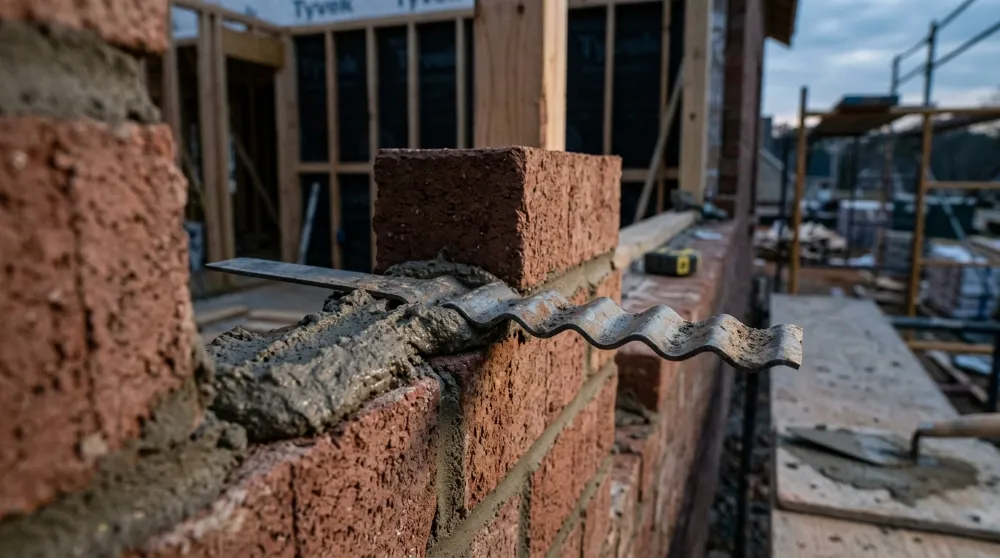
- Brick veneer: one wythe of brick, tied with metal wall ties to a framed or block backup wall, with an air cavity between. The backup carries the load; the brick is the weather and decorative skin.
- Solid brick: two or more wythes of brick bonded together (or a cavity-brick wall with two brick leaves) that carry the structure themselves.
How they compare
| Brick veneer | Solid brick | |
|---|---|---|
| Structure | Frame or block behind carries load | The brick wall carries load |
| Wythes of brick | One | Two or more |
| Brick count | ~half a solid wall | ~double a veneer |
| Insulation | Easy - insulate the backup wall | Harder - mass wall, needs internal/external insulation |
| Weight | Lighter | Heavy |
| Typical use | Most modern homes | Older homes, traditional builds |
For the same wall face, veneer uses about half the brick of a solid two-wythe wall - set single or double skin in the brick calculator and you will see the count change by the number of wythes.
How to tell which one you have
Look at the bond pattern:
- Header bricks (short ends showing) every few courses mean the bricks turn into the wall to tie leaves together - that is solid brick.
- All stretchers (long faces) in every course, with no headers, usually means brick veneer - there is nothing behind to bond to.
The thickness of the wall at a window reveal is another clue: veneer is one brick thick plus the cavity and frame; solid brick is two bricks or more.
Which to build
Most new homes use brick veneer: the framed and insulated backup does the structural and thermal work, the brick handles the weather and the look, and you use roughly half the brick. Solid or cavity brick gives more mass and a traditional feel but is heavier, dearer and harder to insulate well.
Estimating each
- Veneer: count the single outer brick skin (one wythe). If there is a block inner leaf, size it with the concrete block calculator.
- Solid: count two wythes - set double skin in the calculator, which doubles the brick and the mortar.
For the full counting method, see how many bricks do I need, and for the brick sizes, standard brick sizes.
Frequently asked questions
What is the difference between brick veneer and solid brick?
Brick veneer is a single non-structural skin of brick tied to a framed or block wall behind it, with an air cavity between - the frame carries the load and the brick is the weather skin. Solid brick (double-wythe or cavity brick) is two or more leaves of brick that together carry the structure. Veneer uses about half the brick of a solid two-wythe wall for the same wall face.
Is brick veneer as good as solid brick?
For a modern home, brick veneer usually performs better, because the framed or insulated backup wall does the structural and thermal work while the brick handles the weather and the look. Solid brick is more massive and traditional but harder to insulate. Veneer is lighter, cheaper to build and easier to insulate; solid brick has more thermal mass and a different feel.
How can I tell if a wall is brick veneer or solid brick?
Look at the brick bond. A solid brick wall shows header bricks (the short ends) every few courses, where bricks turn to tie the leaves together. A brick veneer shows only stretchers (the long faces) in every course, because there is nothing to bond to behind it. Wall thickness at a window or door reveal is another tell - veneer is thinner.
Does brick veneer use less brick than solid brick?
Yes - brick veneer is a single skin, so it uses about half the brick of a solid double-wythe wall covering the same area. The trade-off is that veneer needs a structural backup wall (timber or steel frame, or block) behind it, plus wall ties and a cavity, which solid brick does not.