
Composite vs Wood Decking
Timber decking is cheaper to buy; composite is cheaper to own. Which wins depends on how long you will keep the deck and how much weekend maintenance you are willing to do. Here is the full picture.
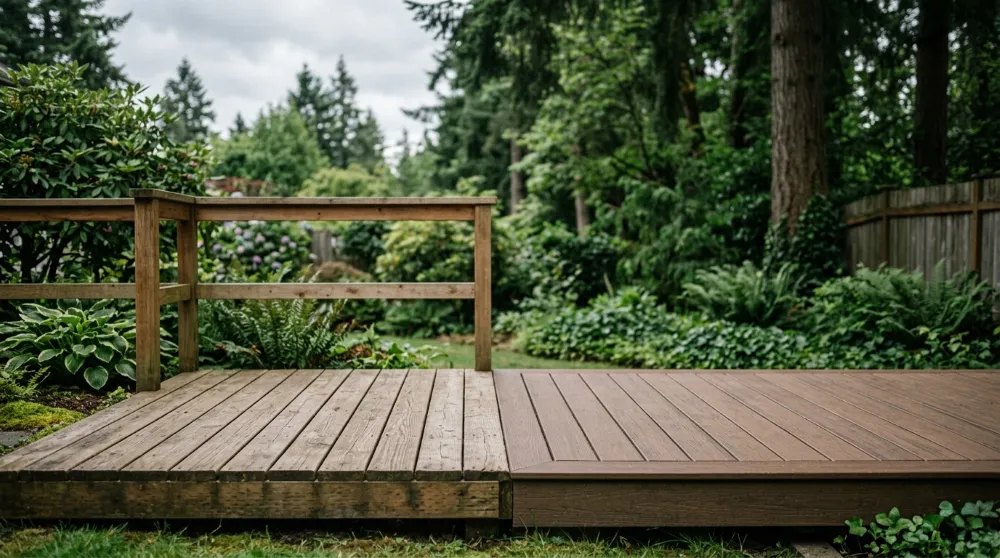
By the Calculate My Reno Team / Published
Skip to the tool
Open the Deck Calculator
The decking aisle splits into two camps: timber (pressure-treated softwood, cedar, or hardwoods) and composite (wood-plastic boards, usually capped). Neither is simply “better” - they trade off upfront cost against maintenance and lifespan.
At a glance
| Timber | Composite | |
|---|---|---|
| Upfront cost | Lower | Higher |
| Maintenance | High - clean, sand, re-stain/oil | Very low - occasional wash |
| Lifespan | 10–25 yrs (varies by species) | 25–30 yrs |
| Look | Natural, ages/greys | Consistent, many colours |
| Feel/heat | Cooler, can splinter | Splinter-free; dark boards get hot |
| Lifetime cost | Higher (upkeep) | Lower over the long run |
The real trade-off: upfront vs lifetime cost
Timber wins on day one - boards are cheaper and it is a familiar material. But timber decks need ongoing work: cleaning, the occasional sand, and re-staining or oiling every year or two to stop greying, splitting and rot. Skip the upkeep and a timber deck ages fast.
Composite costs more to buy but almost nothing to maintain - a wash now and then. Over a 10–25 year life, the saved time, stain and sealant often make composite the cheaper option overall, particularly on a large deck where re-staining is a serious chore.
So the honest rule of thumb:
- Keeping the deck only a few years, or on a tight upfront budget? Timber.
- Long-term deck, and you would rather not spend weekends maintaining it? Composite.
Looks and feel
- Timber has unbeatable natural character and runs a little cooler underfoot, but it splinters with age and greys unless you maintain it.
- Composite offers consistent colour and a splinter-free surface, but dark boards can get hot in direct sun - choose light colours or a cooler PVC line.
Estimate either one the same way
Whichever you choose, the board count comes from the same maths - deck area, board size, the gap between boards, and a wastage allowance. Use the decking calculator to size it, then compare the total material cost of each option rather than the per-board price. Read how many deck boards do I need for the method, and if you lean composite, compare the brands in Trex vs TimberTech vs Fiberon.
Frequently asked questions
Is composite decking cheaper than wood?
Not upfront - composite boards cost more to buy than most timber. But composite needs almost no maintenance, while timber needs regular cleaning, sanding and re-staining or oiling. Over 10–25 years the saved maintenance time and materials often make composite cheaper to own overall, especially for a large deck.
How long does composite decking last vs wood?
Quality capped composite typically lasts 25–30 years and carries a long warranty. Timber varies widely: pressure-treated pine might last 10–15 years, while durable hardwoods can last 25+ years with diligent upkeep. Composite's lifespan is more predictable because it does not rot, warp or splinter the way wood can.
Does composite decking get hot in the sun?
It can - dark composite boards get hot underfoot in direct sun, sometimes hotter than timber. Light-coloured boards and cooler PVC lines reduce this a lot. Timber tends to run a little cooler than dark composite. If barefoot comfort matters, choose a light colour whichever material you pick.