
How to Measure Roof Pitch
You can measure a roof pitch in a couple of minutes with a level and a tape, a speed square, or from inside the attic on a rafter - no need to get on the roof. Here are the three methods and how to turn the result into degrees or a rafter length.
By the Calculate My Reno Team / Published
Skip to the tool
Open the Roof Pitch & Rafter Length Calculator
Roof pitch is just rise over run - how many inches the roof climbs for every 12 inches across. You do not need to measure the whole roof; a short section of slope or a single rafter tells you the pitch. All three methods below give you the same answer, so pick the one that is safest for your roof.
Method 1: level and tape (the 12-inch method)
The classic approach, and the most reliable:
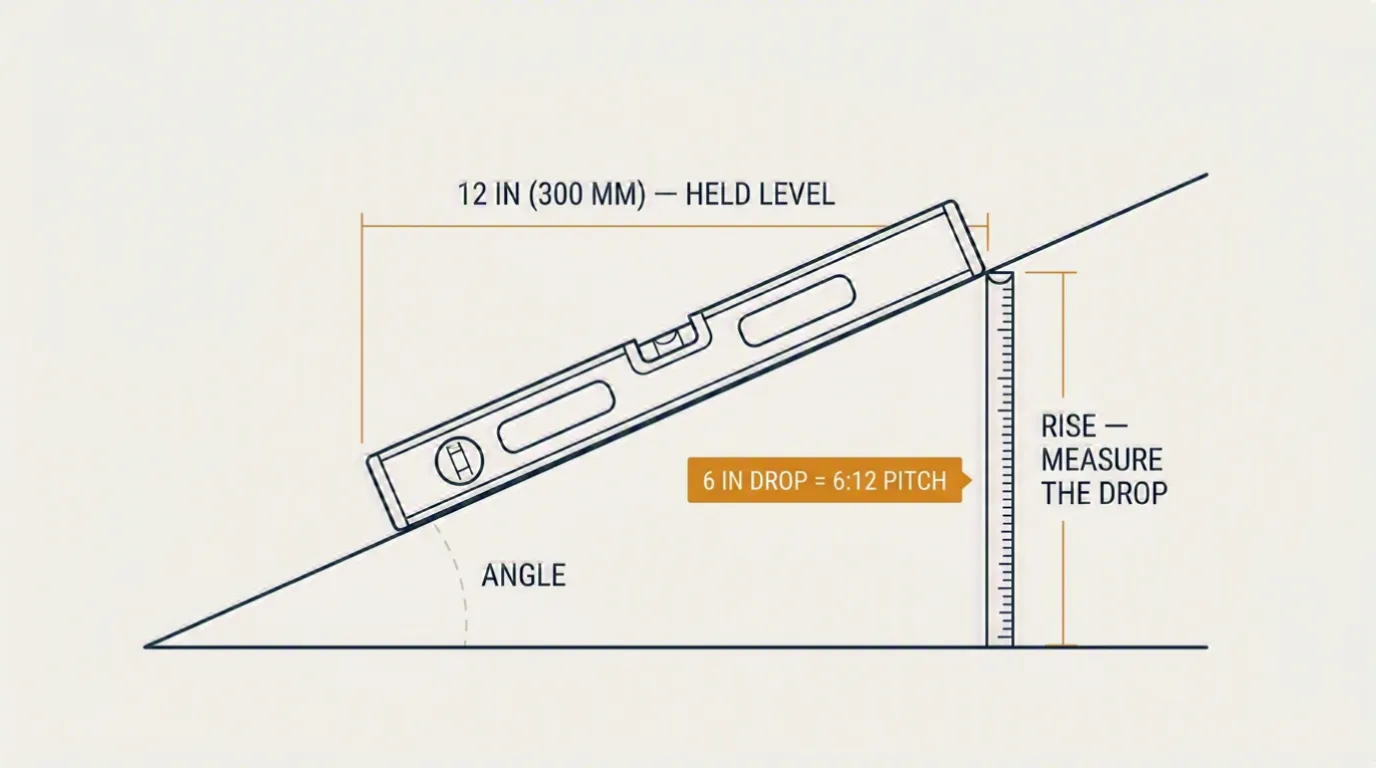
- Hold a 12-inch level against the roof slope (on the surface, or against a rafter), with one end touching and the level held horizontal - watch the bubble.
- From the far end of the level (the 12-inch mark), measure straight down to the roof surface.
- That vertical drop in inches is your pitch. A 6-inch drop = 6:12; a 4-inch drop = 4:12.
For more accuracy, use a 24-inch or 48-inch level, measure the drop, then scale it back: a 16-inch drop over a 48-inch level is 16 ÷ 4 = a 4:12 pitch.
Working in metric? The method is identical - the 12 inches is just the ratio’s base, not a special tool. Hold the level out a known distance (say 500 mm), measure the drop in millimetres, and divide the drop by that distance for the slope ratio; or read the angle in degrees straight off a digital level. Both convert to an x:12 pitch in the roof pitch chart.
Method 2: speed square (fastest)
A speed (rafter) square has a pitch scale built in:
- Rest the square’s pivot point on the edge of a rafter or the roof.
- Let it hang and tilt until the long edge sits flat along the slope.
- Read the “common” pitch number at the reference line. That is your x:12 pitch in one move.
Method 3: from inside the attic (safest)
You never have to climb the roof. In the loft or attic, run Method 1 against the underside of a rafter: hold the level out horizontally, mark 12 inches, and measure down to the rafter. A digital level or a phone inclinometer app laid along the rafter reads the angle in degrees directly - convert it to a pitch by multiplying its tangent by 12, or just type the angle into the calculator.
From the ground
If the roof is too steep or high to reach safely, take a clear side-on photo of the gable end, measure the rise and run on the image, and divide - the ratio is the same at any scale. It is an estimate, not a cut-from figure, but it is enough to plan with.
Turn the measurement into rafters
A pitch on its own does not cut timber. Drop your measured pitch (as a x:12 ratio or an angle) into the roof pitch calculator with your run or span, and it returns the angle, the grade, the slope factor and the common rafter length. To see every pitch in degrees and percent at a glance, use the roof pitch chart.
Safety first
Only get on a roof when it is dry, low enough and shallow enough to be safe, with proper access and a spotter - otherwise measure from the attic or the ground. A few minutes indoors beats a fall.
Frequently asked questions
How do you measure roof pitch with a level?
Hold a 12-inch level horizontal against the roof slope (or a rafter), level the bubble, then measure straight down from the 12-inch mark to the roof surface. That drop in inches is the pitch: a 6-inch drop over the 12-inch level is a 6:12 pitch. Use a longer level over a bigger span and scale the drop back to 12 for more accuracy.
Can I measure roof pitch from the ground?
Not directly with a level, but you can from inside the loft or attic against a rafter, which is safest. You can also estimate it from a clear side-on photo by measuring the rise and run on the image, or use a phone inclinometer app held against a rafter or gable end. For an exact figure, the level-and-tape method on an accessible rafter is best.
How do I find roof pitch without going on the roof?
Go into the attic and measure against the underside of a rafter: hold a level out horizontally, mark 12 inches along it, and measure down to the rafter. That rise over 12 is your pitch, measured safely indoors. A digital level or phone angle app laid on the rafter gives the angle directly, which you can convert to a x:12 pitch.
How do I convert the measurement to degrees or a rafter length?
Once you have the pitch as a x:12 ratio (or an angle off a digital level), enter it in the roof pitch calculator with your run or span. It returns the angle in degrees, the percentage grade, the slope factor and the common rafter length, so a quick measurement becomes everything you need to cut rafters.
What tools do I need to measure roof pitch?
A spirit level (a 12-inch torpedo level is ideal), a tape measure or ruler, and a pencil. A speed (rafter) square with a pitch scale, or a digital level or phone inclinometer app, makes it even quicker. None of it is specialist - most of it is already in a basic toolkit.