
How Many Coats of Paint Do I Need?
The number of coats decides both the finish and how much paint you buy. Here is when one coat will do, when you need two or three, and when a separate primer saves you a coat.
By the Calculate My Reno Team / Published
Skip to the tool
Open the Paint Calculator
How many coats you apply changes the finish, the durability and - because it multiplies your paint quantity - the cost. Here is how to decide.
The quick guide
| Situation | Coats | Notes |
|---|---|---|
| Repaint, similar colour, sound wall | 1–2 | One can do; two is safer for an even finish |
| Standard repaint or new colour | 2 | The default for most rooms |
| Dark to light (or strong colours) | 3 (or primer + 2) | A tinted primer saves topcoats |
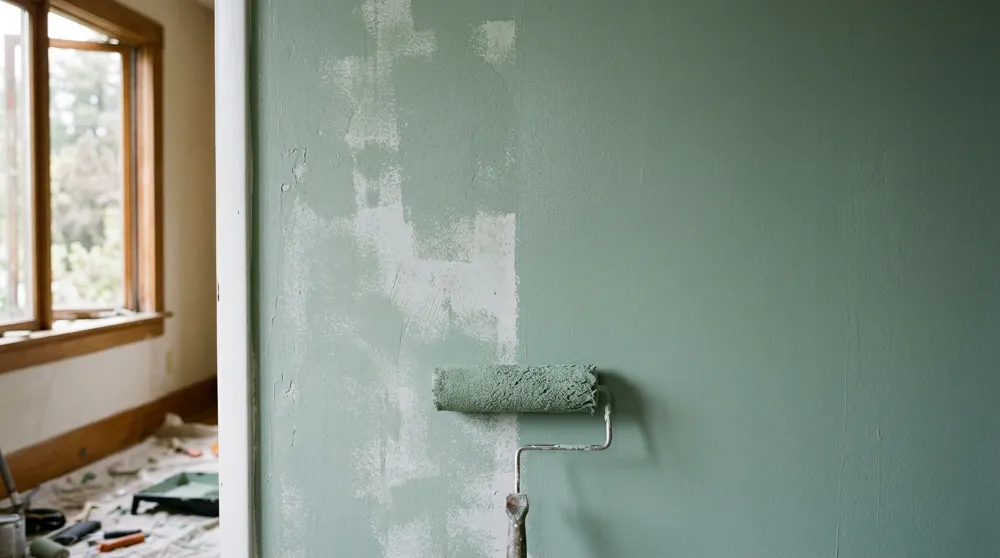
| Bare plaster, new drywall, patches | Primer + 2 | Seal first or the wall drinks the paint |
| Bare wood / stain-blocking | Primer + 2 | Stops bleed-through |
Two coats is the default
For most repaints, two coats is the standard for a durable, even finish that hides roller lap marks and slight colour variation in the wall beneath. The paint calculator defaults to two for this reason - it multiplies your wall area by the coats you set.
When one coat is enough
Only when you are repainting a sound wall in a very similar colour with a quality paint. Even then, a second coat is cheap insurance against patchiness. Do not plan a whole room around one coat unless you have tested it.
When you need three (or a primer)
- Dark to light: the hardest change. Use a tinted/grey primer then two topcoats - far more reliable than three coats of light paint over dark.
- Strong, saturated colours (deep reds, yellows): pigments cover poorly, so three coats is common.
- Bare or porous surfaces (new plaster, drywall, filler, bare wood): prime first to seal them, or the first topcoat soaks in unevenly.
Primer counts toward your paint maths
If you are priming, that is effectively another full coat of product to buy. Set your coats accordingly in the paint calculator, and remember bare or textured surfaces also lower coverage, so they use more paint per coat. For the full quantity method see how much paint do I need; for outdoor jobs, interior vs exterior paint.
Frequently asked questions
Is one coat of paint ever enough?
Occasionally - when you are repainting a sound wall in a very similar colour with a quality paint, one coat can be enough. But most jobs need two coats for an even, durable finish that hides roller marks and colour variation. Treat one coat as the exception, not the plan.
Do I need to prime before painting?
Prime bare plaster, new drywall, patched repairs, bare wood, and when making a dramatic colour change (especially dark to light). Primer seals porous surfaces so the topcoat covers evenly, and it can save you a topcoat. Over a sound, similar-coloured painted wall you usually do not need a separate primer.
How many coats to cover a dark wall with a light colour?
Plan on a tinted primer plus two topcoats, or three coats of a quality paint. Dark-to-light is the hardest colour change to cover; a grey or tinted primer underneath dramatically reduces the number of topcoats you need versus painting light straight over dark.