
Interior vs Exterior Paint
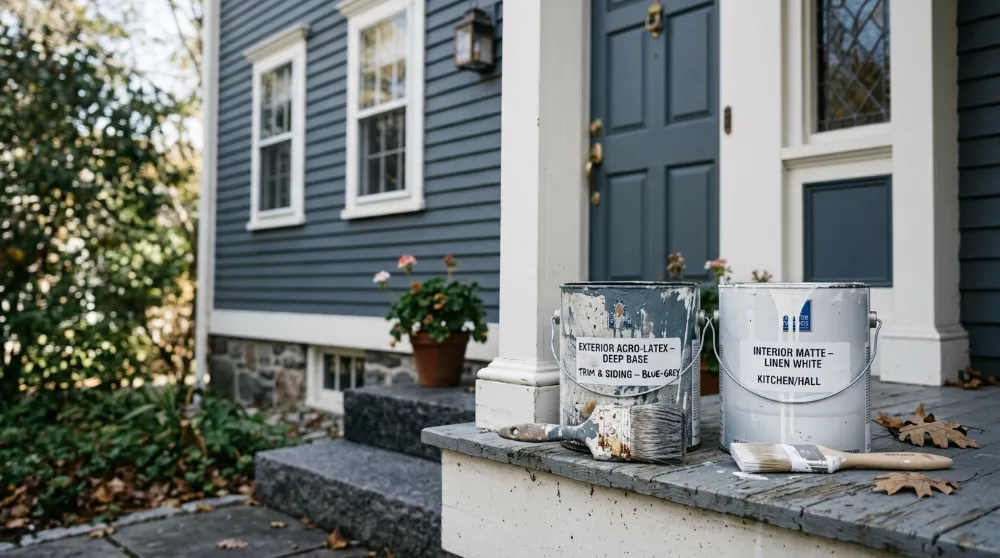
Interior and exterior paint look identical in the tin, but they are built for different jobs. Use the wrong one outdoors and it fails within a season. Here is the difference and how it affects how much you buy.
By the Calculate My Reno Team / Published
Skip to the tool
Open the Paint Calculator
Interior and exterior paint are formulated for completely different environments. The pigments may match, but what is around the pigment - the resins and additives - is built for opposite conditions.
What makes exterior paint different
Exterior paint has to survive sun, rain, temperature swings and mould. So it includes:
- UV stabilisers to resist fading,
- flexible resins that expand and contract with the surface without cracking,
- mildewcides and water resistance for damp, and
- tougher binders for abrasion and weather.
Interior paint trades all of that for low odour, easy application, scrubbability and a smooth finish - exactly what you want indoors and exactly what fails outdoors.
Why you can’t swap them
- Interior paint outside: no UV or moisture defence - it fades, chalks, cracks and peels within a season or two.
- Exterior paint inside: the additives and stronger solvents can off-gas longer and are not formulated for indoor air; it is also overkill and often more expensive.
Use each where it belongs.
How it changes your quantity
Exterior jobs usually need more paint than the same area indoors:
- Lower coverage - render, brick and weatherboard are porous and textured, so drop your coverage figure 20–30%.
- Two full coats are standard outside, plus a primer/sealer on bare or chalky surfaces.
So measure the outside wall area the same way (perimeter × height, minus large openings), but set a lower coverage and two-plus coats in the paint calculator.
Sheen, briefly
- Inside: matte/eggshell on walls, satin/semi-gloss on trim and in wet rooms.
- Outside: satin and semi-gloss shed water and dirt; masonry paint is usually a textured matte.
Glossier finishes show every flaw, so prep matters more the shinier you go.
Then work out the amount
Whichever you are using, the quantity comes from the same maths - area × coats ÷ coverage. Set the coverage and coats to suit the surface in the paint calculator, and see how much paint do I need and how many coats of paint do I need for the detail.
Frequently asked questions
Can I use interior paint outside?
No. Interior paint lacks the UV stabilisers, flexible resins and mildew/water resistance that exterior paint needs. Used outdoors it fades, cracks and peels within a season or two. Always use exterior-grade paint outside, even on a porch or shed.
Does exterior paint cover the same as interior?
Usually less per litre. Exterior surfaces - render, masonry, weatherboard - are more porous and textured than interior plasterboard, so they absorb more paint. Drop your coverage figure 20–30% for exterior masonry and plan on two full coats, plus a primer on bare surfaces.
What sheen should I use inside vs outside?
Inside: matte or eggshell for walls, satin or semi-gloss for kitchens, bathrooms and trim where you need to wipe them. Outside: follow the exterior product range - satin and semi-gloss shed water and dirt well, while masonry paints are typically a textured matte. Glossier sheens highlight surface flaws, so prep matters more.